
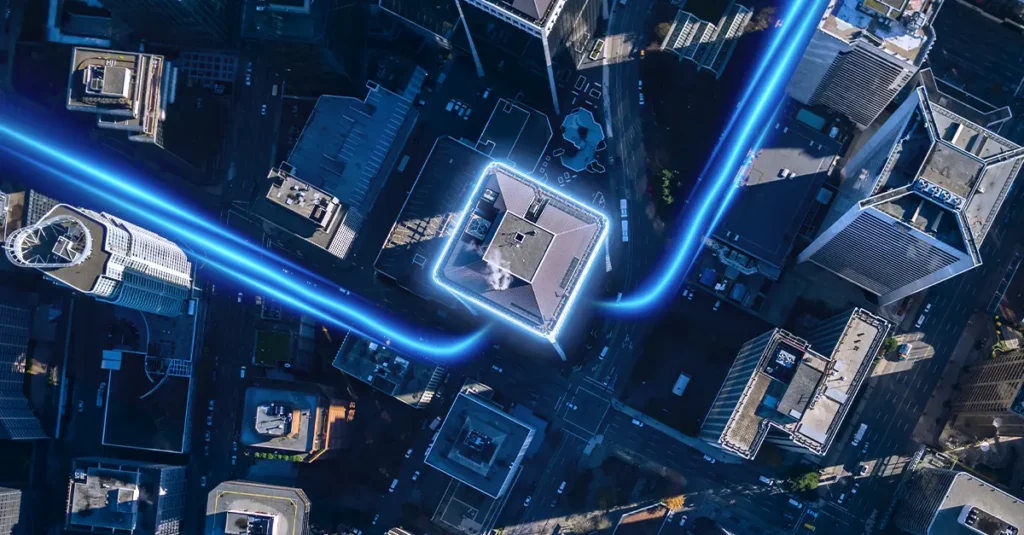
Connectivity is at the heart of business. It allows sales, systems, customer service, and operations to remain online continuously. However, achieving true redundancy in business connectivity is a challenge many companies only address after a major outage.
When the connection fails, more than just internet access is lost: processes are halted, revenue is affected, and the customer experience is put at risk. The real challenge is to be prepared so that failures do not impact operations.
In this context, two concepts become key to ensuring continuity: redundancy and the last mile.
Redundancy: the key to staying operational
Redundancy prepares connectivity for failures, so the business can continue operating without visible interruptions.
When a network architecture is well planned, the failure of a single connection does not cause operational downtime. A second path automatically kicks in, keeping critical systems active and avoiding unexpected downtime.
In short, redundancy does not eliminate failures, but it does eliminate their impact.
The last mile: where reliability connects
The last mile is more than just the final stretch of the connection; it is the point where connectivity becomes strategic for the business.
When this link is designed correctly, it becomes a competitive advantage. It enables greater service stability, more predictable operations, and a consistent experience for customers and internal teams, even amid external events.
A robust last mile involves diversified routes, independent physical access points, and an architecture designed to protect operations, prioritizing truly intelligent connectivity.
In the last mile, the most important thing is reliability: knowing that it is designed to withstand anything.
The most common mistake: believing you already have backup
One of the most common scenarios is assuming the company already has redundancy when, in reality, both links depend on the same physical route.
Two contracts or two links do not guarantee continuity if the connection enters through the same physical route or uses the same infrastructure in the last mile.
When this happens, the backup plan ceases to be one. In the event of a failure, both links will fail simultaneously, and operations will stop.
True redundancy begins when single points of failure are eliminated.
What does well-protected connectivity look like?
Connectivity designed for continuity is based on real diversity, not just the number of links.
This includes:
- Independent physical routes
- Diversified last mile
- Complementary technologies
- Constant monitoring and periodic testing
- SLA aligned with actual business impact
The result is a network ready to respond automatically to any interruption, keeping operations active and providing a consistent experience for customers and internal teams.
The real impact of not having redundancy
Connectivity interruptions rarely remain technical issues. They quickly translate into stalled processes, waiting customers, unproductive teams, and lost opportunities.
Although the outage may last only a few minutes, the impact on operations, reputation, and trust can extend far beyond the incident.
Investing in redundancy and the last mile is not just a technological decision; it is a business decision.
Is your company truly protected?
Before a failure occurs, it is worth asking yourself some key questions:
- Do my links use truly independent physical routes?
- Is the last mile diversified?
- Does my backup kick in automatically?
- Is the SLA aligned with the real impact of connectivity on my business?
Answering these questions allows you to identify hidden risks and make informed decisions before operations are affected.
Conclusion
In an environment where operations depend on always being online, connectivity can no longer be left to chance. It is not enough to have multiple links or sign more than one contract: true protection lies in the design of your network.
Well-implemented redundancy ensures that failures do not translate into operational downtime. The last mile, when diverse and independent, becomes the point where reliability is truly guaranteed. Together, they form an architecture that automatically responds to interruptions without affecting the customer experience or business continuity.
At Flō Networks, we design last-mile and redundancy solutions aligned with each company’s needs, with SLAs commensurate with the real impact of connectivity on their operations. The result is a solid, scalable architecture ready for operational continuity.
Contact us to learn how we can become your connectivity partner and achieve uninterrupted connections. Join the growing community of organizations in the United States, Mexico, and Latin America that trust us to protect their operations with reliable connectivity.